
Nigeria has a strong agricultural base and is one of Africa’s important groundnut-producing countries. This creates an opportunity for entrepreneurs, agro-processors, food manufacturers, and investors who want to move beyond selling raw groundnuts and enter value-added peanut processing.
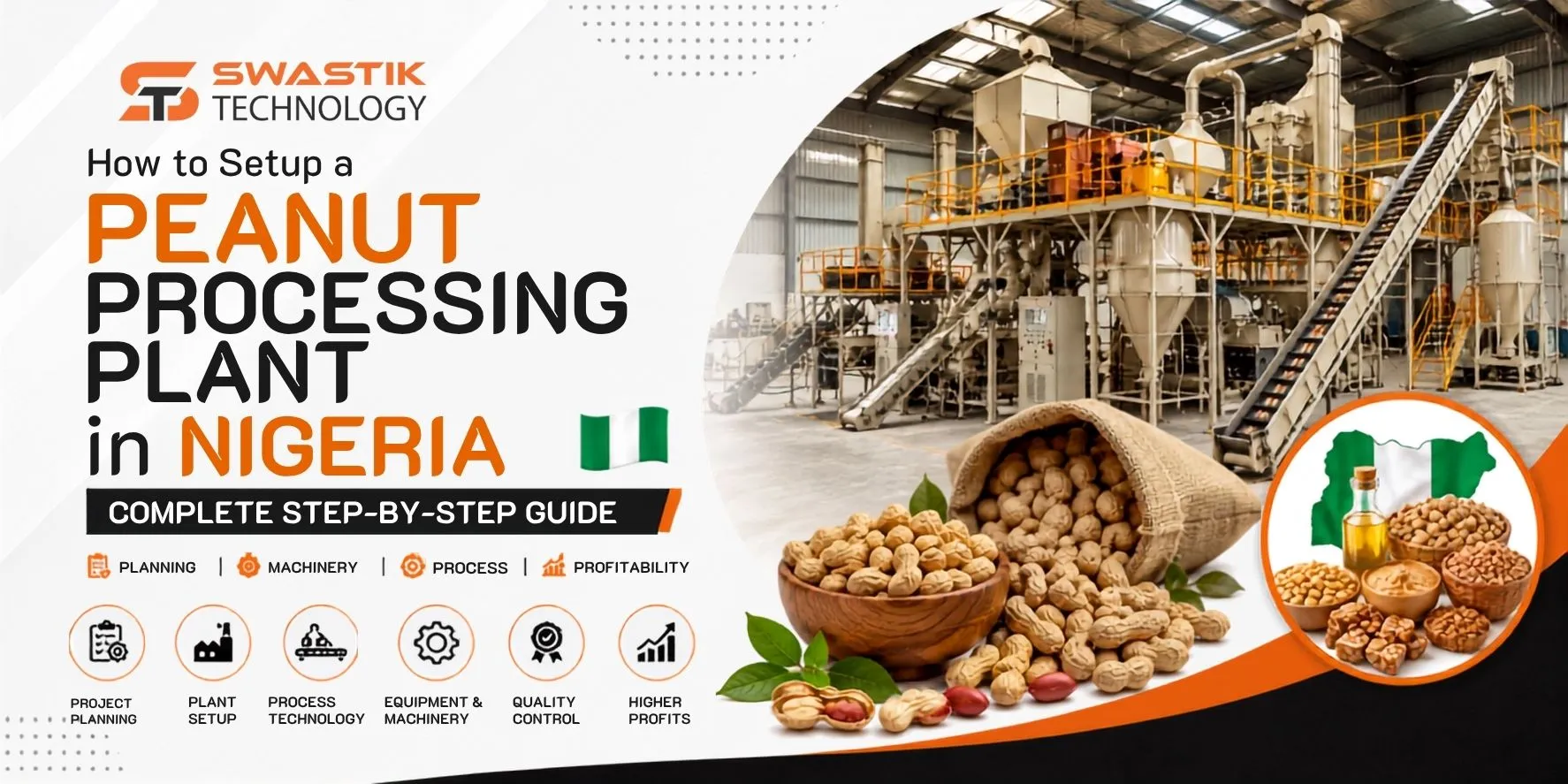
A peanut processing plant setup in Nigeria can be designed to produce different products, including cleaned and graded peanuts, roasted peanuts, peanut butter, peanut flour, peanut oil, and other peanut-based food products.
However, setting up a processing plant is not simply a matter of purchasing machines. The right plant depends on the type of peanut products you want to manufacture, your available raw material, production capacity, target customers, budget, location, and quality requirements.
This guide explains the major factors to consider before investing in a peanut processing plant in Nigeria, based on our experience designing and supplying peanut processing plants for processors across Africa and Asia.
Why Set Up a Peanut Processing Plant in Nigeria?
The first question for any investor is not “Which machine should I buy?” but “Why should I process peanuts?”
Nigeria has an established groundnut-growing sector, particularly across several northern states. This provides access to locally produced raw materials that can be processed into higher-value products.
A processing plant can create opportunities in several areas:
1. Availability of Raw Groundnuts
Groundnuts are cultivated extensively in Nigeria, creating a potential local supply base for processors.
Being closer to major groundnut-producing areas can also help businesses reduce transportation costs and improve access to raw materials.
2. Value Addition
Instead of selling raw groundnuts, a processor can add value through cleaning, shelling, grading, sorting, roasting, grinding, pressing, or other processing operations.
Depending on the business model, the same raw material can be converted into several different commercial products.
3. Demand for Processed Peanut Products
Peanut products are used by households, food manufacturers, bakeries, snack companies, restaurants, and other businesses.
Potential products include:
- Shelled peanuts
- Roasted peanuts
- Peanut butter
- Peanut flour
- Peanut oil
- Peanut cake
- Peanut-based snacks
- Food ingredients
4. Domestic Market Opportunities
A Nigerian processing plant can supply products to wholesalers, retailers, food manufacturers, supermarkets, restaurants, and other commercial buyers.
Local processing can also help businesses develop products specifically suited to domestic consumer demand.
5. Export Opportunities
Businesses that achieve the required quality, food-safety, packaging, and documentation standards may also explore international markets.
This makes plant planning important: a facility intended for export may require different quality-control, sorting, packaging, and traceability capabilities than a plant serving only a local market.
6. Employment and Local Manufacturing
A commercial peanut processing facility can create employment in machine operation, quality control, packaging, maintenance, warehousing, logistics, administration, sales, and other functions.
Who Needs a Peanut Processing Plant in Nigeria?
A peanut processing plant may be suitable for several types of businesses.
Farmers and Agricultural Cooperatives
Farmers who already produce significant quantities of groundnuts may consider processing to move further up the value chain.
Agro-Processing Entrepreneurs
Entrepreneurs can purchase groundnuts from farmers and suppliers and convert them into processed products for commercial markets.
Food Manufacturers
Existing food manufacturers may use processed peanuts as ingredients or develop their own peanut-based products.
Peanut Traders and Aggregators
Businesses already involved in buying and selling groundnuts can potentially add processing and packaging to their operations.
Export-Oriented Businesses
Companies targeting international buyers may establish processing facilities capable of meeting the quality and packaging requirements of their target markets.
Investors Entering Agro-Processing
Investors looking for opportunities in agricultural value addition may consider peanut processing as part of a broader agro-processing business.
What Peanut Products Can You Manufacture?
The products you intend to sell should be decided before selecting your machinery.
Different products require different processing stages.
| Product | Typical Processing Stages |
| Shelled Peanuts | Cleaning → Shelling → Grading → Sorting → Packaging |
| Roasted Peanuts | Cleaning → Shelling → Sorting → Roasting → Packaging |
| Peanut Butter | Cleaning → Shelling → Sorting → Roasting → Grinding → Packaging |
| Peanut Flour | Cleaning → Shelling → Sorting → Roasting → Grinding → Packaging |
| Peanut Oil | Cleaning → Shelling → Crushing/Pressing → Filtration → Packaging |
| Peanut Cake | Oil Extraction → Cake Collection → Processing/Packaging |
| Export-Grade Peanuts | Cleaning → Grading → Sorting → Quality Control → Packaging |
Not every peanut processing plant needs every machine listed above.
Your plant should be designed around the products you actually intend to manufacture.
How Does a Peanut Processing Plant Work?
The exact process depends on the final product, but a typical peanut processing line may include the following stages:
Raw Peanut Receiving → Cleaning → Destoning → Shelling → Grading → Sorting → Roasting/Blanching → Processing → Packaging
[IMAGE: Simple left-to-right flow diagram showing the 9 stages listed below as connected icons — alt text: “Peanut processing plant workflow diagram from raw peanut receiving to packaging”]
Let’s look at the major stages.
1. Raw Peanut Receiving
Raw groundnuts are received at the facility and inspected before processing.
The plant should have suitable storage and handling arrangements to protect the raw material from moisture, contamination, pests, and deterioration.
2. Cleaning
The cleaning stage removes unwanted materials such as dust, soil, stones, stalks, leaves, and other foreign materials.
Effective cleaning helps protect downstream machinery and improves product quality.
3. Destoning
A destoner can separate heavier materials such as stones from the peanut stream. Some processors also use a magnetic destoner to remove fine iron impurities that a standard destoner won’t catch.
This is particularly important when raw agricultural material contains soil and field debris.
4. Shelling
A decorticator separates peanut kernels from their outer shells.
The shelling equipment should be selected according to the required capacity and the characteristics of the raw peanuts.
5. Grading
A grader or round grader separates peanuts according to size or other specified characteristics.
Different grades may be directed toward different products or customers.
6. Sorting
Sorting helps remove defective, discoloured, damaged, or otherwise unsuitable kernels.
Modern sorting solutions can improve consistency and help processors achieve more controlled product quality.
7. Roasting or Blanching
Depending on the final product, peanuts may undergo roasting, blanching, or another treatment.
For example, roasted peanuts and peanut butter may require roasting, while some products may require the removal of skins.
8. Grinding, Pressing, or Further Processing
The next stage depends on the product. Peanuts may be ground into peanut butter, ground into peanut flour, pressed for oil, roasted and packaged, or processed into other food products.
9. Packaging
Finished products should be packed in packaging appropriate for the product, market, storage conditions, and distribution method.
What Machinery Is Required for a Peanut Processing Plant?
The machinery required depends on your production process and product range.
A basic peanut processing line may include a peanut cleaner, destoner, decorticator, grader, sorter, roaster, blancher, grinder, oil press, oil filtration equipment, conveyor systems, storage equipment, weighing systems, and packaging machines. You can see the complete range on our machinery page.
A larger integrated plant may require additional automation, material-handling systems, quality-control equipment, and specialized processing machinery.
The key point is that there is no single machine configuration that is suitable for every peanut processing business.
The equipment should be selected based on product, raw material, production capacity, automation level, available space, labour availability, target market, quality requirements, budget, and future expansion plans.
| Not sure which of these machines your plant actually needs? Swastik Technology has spent 35+ years designing peanut processing lines and configuring the right combination of machines for 700+ processors worldwide. Get a Free Plant Consultation → |
How Much Does a Peanut Processing Plant Cost in Nigeria?
There is no single price for a peanut processing plant.
The total investment can vary significantly depending on the scale and configuration of the project.
Major cost components may include:
Machinery and Equipment
This is usually one of the most important parts of the investment. The cost depends on the number of processing stages, capacity, automation, and equipment specifications.
Factory or Building
Costs may include land, factory construction, flooring, storage areas, production areas, offices, utilities, and loading/unloading areas.
Installation and Commissioning
Machinery installation, electrical work, testing, commissioning, and operator training should also be considered.
Utilities
Depending on the plant, investors may need to budget for electricity, backup power, water, ventilation, waste management, and other utility infrastructure.
Packaging
Packaging equipment and packaging materials can represent a significant operating cost, particularly for consumer products.
Working Capital
Working capital is often overlooked. A business may need funds for raw groundnuts, packaging materials, labour, transportation, maintenance, utilities, inventory, and distribution.
Therefore, when calculating the investment required for a peanut processing plant in Nigeria, consider both fixed investment and working capital.
How to Decide the Right Production Capacity
Choosing plant capacity is one of the most important decisions in the project.
Do not simply choose the largest available machine.
Instead, consider: how many tonnes of groundnuts can you source, how much raw material is available during and after harvest, who your customers are, what quantity you can realistically sell, how many hours per day the plant will operate, what production capacity your budget can support, and whether you plan to expand in future.
For example, a business supplying a small regional market may have very different capacity requirements from an exporter supplying large international buyers.
A scalable plant design can allow the business to increase production as demand grows.
Where Should You Locate a Peanut Processing Plant in Nigeria?
Location can significantly affect the economics of a processing project.
When evaluating potential locations, consider:
- Proximity to raw material — being closer to groundnut-producing areas can simplify procurement and transportation
- Transportation — practical access to roads and transportation networks for bringing in raw materials and delivering finished products
- Electricity and utilities — reliable access is important for continuous processing
- Labour — availability of workers for production, maintenance, quality control, packaging, and administration
- Storage — suitable storage conditions for groundnuts and finished products
- Target market — if customers are concentrated in another region, being closer to the market may sometimes outweigh proximity to farms
- Export logistics — for export-oriented businesses, access to major transportation and logistics infrastructure
How to Source Groundnuts for Your Processing Plant
A processing plant is only as reliable as its raw-material supply.
Potential sourcing channels include farmers, farmer cooperatives, agricultural aggregators, groundnut traders, local suppliers, and contract farming arrangements.
Before investing heavily in machinery, evaluate the availability and quality of raw groundnuts in your target sourcing region — including quantity, quality, seasonality, moisture, variety, storage conditions, purchase price, transportation cost, and consistency of supply.
A plant with excellent machinery but an unreliable raw-material supply can struggle to operate efficiently.
Peanut Quality and Aflatoxin Management
Quality control should be considered from the beginning of the project.
Peanuts can be vulnerable to aflatoxin contamination, making proper raw-material handling, drying, storage, sorting, testing, and quality management particularly important.
A processing plant should therefore consider raw-material inspection, proper drying, moisture management, clean storage, pest control, sorting, quality testing, hygienic processing, proper packaging, and traceability.
If you plan to supply major food manufacturers or export markets, quality requirements may be even more demanding.
The exact testing and compliance requirements should be determined according to the products you manufacture and the markets you intend to serve.
Regulations and Food-Safety Requirements
Before starting commercial production, investors should identify the applicable Nigerian regulatory and food-safety requirements for their specific products and business structure.
Depending on the products and operation, this may involve requirements related to organizations such as NAFDAC and other relevant Nigerian authorities.
Consider requirements related to factory registration, product registration, food safety, labelling, packaging, quality control, environmental requirements, worker safety, and waste management.
Requirements can vary depending on the product and intended market, so businesses should verify the current requirements with the relevant authorities before investing.
Domestic Market or Export Market?
Your target market should influence your plant design.
Domestic market businesses may focus on supplying wholesalers, retailers, supermarkets, food manufacturers, restaurants, bakeries, snack manufacturers, and distributors.
Export market businesses may need to place greater emphasis on consistent quality, food safety, sorting, packaging, traceability, product specifications, documentation, and destination-country requirements.
It is therefore useful to identify your target market before finalizing the processing line.
Is Peanut Processing Profitable in Nigeria?
Peanut processing can be a profitable business opportunity, especially when there is good access to raw peanuts and strong demand for processed products.
Profitability depends on a few key factors, such as:
- Cost of raw peanuts
- Production capacity and plant utilization
- Labour and energy costs
- Product selling price
- Market demand
- Product quality and mix
- Equipment efficiency and maintenance
For this reason, investors should prepare a detailed feasibility study and financial model before making a major investment.
Instead of asking only “How much does a peanut processing plant cost?”, ask:
“How much will the plant produce, who will buy the products, what will production cost, and what margin can the business realistically achieve?”
That provides a much better basis for an investment decision.
Common Mistakes to Avoid
- Buying machinery before defining the product. Decide what you want to manufacture first.
- Choosing capacity without studying the market. A high-capacity plant is not automatically a better investment.
- Ignoring raw-material supply. Confirm where your groundnuts will come from and how much you can reliably procure.
- Underestimating working capital. Machinery is only part of the investment.
- Ignoring quality control. Poor raw-material quality or inadequate storage can affect the entire operation.
- Designing only for today’s demand. If expansion is part of your business plan, consider scalability during the initial plant design.
- Choosing a manufacturer based only on machine price. Consider machinery quality, engineering design, installation, commissioning, operator training, spare parts, after-sales support, and maintenance.
How to Choose a Peanut Processing Plant Manufacturer
When comparing suppliers, ask for more than a machinery quotation.
Evaluate:
- Technical capability — can the manufacturer design a processing line around your specific product and capacity?
- Complete plant integration — can different processing stages work together as a complete system?
- Installation and commissioning — will the supplier provide installation, testing, and commissioning support?
- Training — will operators receive appropriate training?
- After-sales service — what support is available after installation?
- Spare parts — can critical spare parts be obtained when required?
- Customization — can the plant be adapted to your raw material, product, capacity, and future expansion requirements?
- Previous experience — ask about similar processing projects and applications
At Swastik Technology, this is how we approach every project: 35+ years designing peanut processing lines, 700+ processors supplied globally, and full support from plant design through installation, commissioning, and after-sales service.
A Practical Checklist Before Investing
Before proceeding with a peanut processing plant setup in Nigeria, answer these questions:
- Where will I source my groundnuts?
- What products will I manufacture?
- Who will buy my products?
- What production capacity do I need?
- Where should I locate the factory?
- What machinery is actually required?
- How much fixed investment is required?
- How much working capital will I need?
- What quality standards must I meet?
- How will I manage aflatoxin and contamination risks?
- Will I target domestic customers, export markets, or both?
- What level of automation do I need?
- Can the plant be expanded later?
- Who will install and commission the machinery?
- What after-sales and technical support will I receive?
Answering these questions before purchasing equipment can significantly improve the quality of your investment decision.
Why Work With an Experienced Peanut Processing Plant Manufacturer?
A peanut processing project involves more than individual machines. The complete system needs to work together efficiently, from raw-material handling through processing and packaging.
An experienced plant manufacturer can help you evaluate processing requirements, plant capacity, machinery configuration, material flow, factory layout, automation, installation, commissioning, operator training, maintenance, and future expansion.
The right solution should be designed around your raw material, products, capacity, market, and business objectives rather than simply selling a standard machine package.
Set Up Your Peanut Processing Plant in Nigeria
If you are planning a peanut processing plant setup in Nigeria, start by defining your product, capacity, raw-material supply, target market, and investment requirements.
Once these factors are clear, the appropriate processing line and machinery can be selected around your actual business requirements.
Swastik Technology has supplied peanut processing plants and machinery to 700+ customers over 35+ years, and can help you evaluate the machinery and plant configuration required for your peanut processing project in Nigeria.
Whether your objective is cleaning and grading peanuts, producing roasted peanuts, manufacturing peanut butter, processing peanut oil, or developing a more comprehensive peanut processing line, the right plant configuration should be determined based on your specific requirements.
Contact Swastik Technology → to discuss your processing requirements, capacity, products, and plant configuration. Our team responds within 24 hours.
FAQs About Peanut Processing Plant in Nigeria
How much does a peanut processing plant cost in Nigeria?
The cost of a peanut processing plant in Nigeria depends on the plant capacity, automation level, processing stages, machinery, installation, and working capital.
What machines do I need for a basic peanut processing plant?
At minimum: a cleaner, destoner, decorticator for shelling, and a grader for sorting by size. Additional machines like roasters, grinders, or oil presses depend on your final product.
Is peanut processing profitable in Nigeria?
Yes, peanut processing can be a profitable business opportunity in Nigeria, especially with good access to raw peanuts and a reliable market for processed products. Your profitability will depend on factors such as raw material costs, plant capacity, utilization, product mix, and market demand.
Can a peanut processing plant be expanded later?
Yes, if it’s designed for scalability from the start. This is one of the most common oversights investors make — planning only for today’s demand.