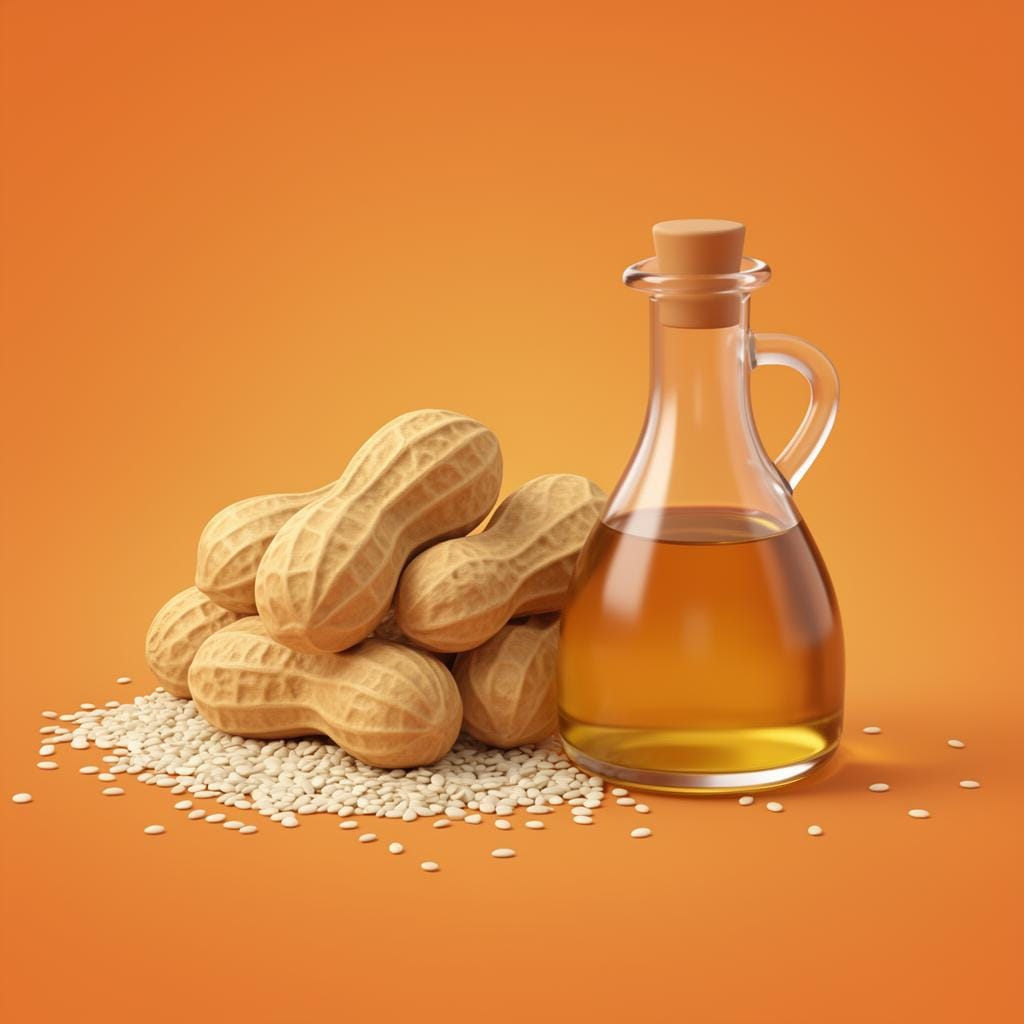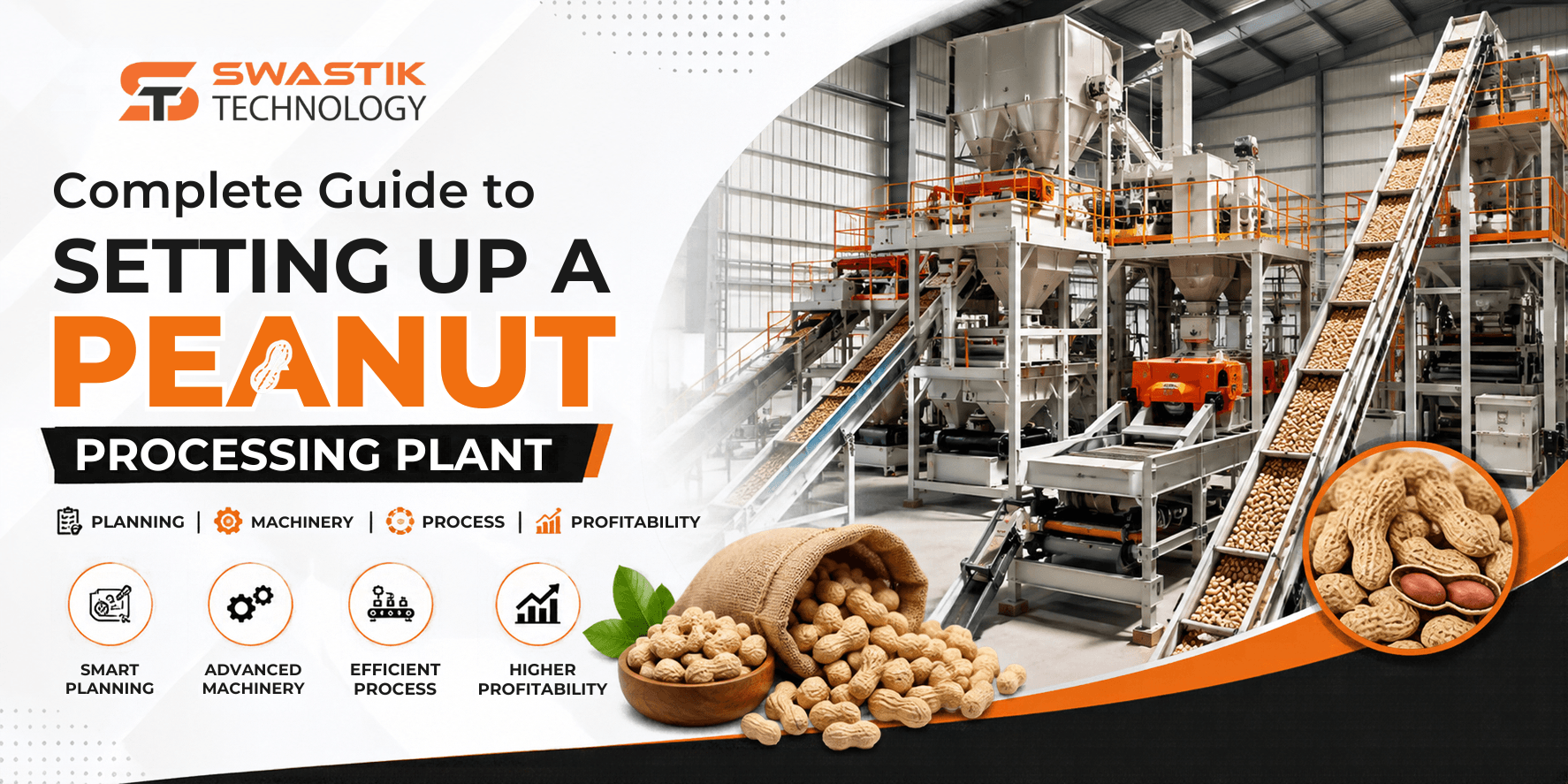

Peanuts, also called groundnuts, move through several distinct mechanical stages before they become oil, butter, roasted snacks, or animal feed. The success of a peanut processing business depends far less on paperwork and far more on getting the right machinery on the floor, arranged in the right sequence, and sized correctly for your output goals. If you are researching how to set up peanut processing plant operations, this guide focuses on exactly that: the equipment, the process flow, and how to choose the machinery that will actually run your plant.
Understanding the Peanut Processing Line
Before selecting any machine, it helps to see the plant as a single connected line rather than a collection of individual purchases. Raw peanuts enter at one end and, depending on your product mix, exit as shelled kernels, roasted peanuts, peanut butter, crude or refined oil, or peanut cake for feed. Every piece of Peanut Processing Equipment you buy has to fit into this sequence without creating a bottleneck.
A standard Groundnut Processing Plant line typically follows this order:
- Raw material receiving and pre-cleaning
- Destoning and grading
- Shelling and shell separation
- Kernel grading and color sorting
- Roasting (dry, oil, or steam roasting depending on product)
- Peeling (skin removal)
- Product-specific processing — oil extraction, grinding for butter, or direct packaging for roasted/salted peanuts
- Packaging and storage
Understanding this flow first lets you evaluate Peanut Processing Machinery based on where it sits in the line, what feeds into it, and what it hands off to the next stage — rather than buying machines in isolation.
Stage-by-Stage Machinery Breakdown
1. Cleaning and Destoning Equipment
Raw peanuts arriving from farms carry dust, stalks, stones, and undersized or damaged pods. A cleaning and destoning machine uses a combination of air suction, vibrating screens, and gravity separation to strip out this debris before it can damage downstream machinery or contaminate the final product. Skipping or under-sizing this stage is one of the most common causes of premature wear on shellers and roasters, so it’s worth matching the destoner’s throughput to your intended plant capacity from day one.
2. Peanut Shelling Machine
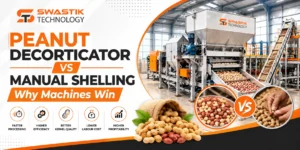
The sheller is the mechanical heart of the plant. It cracks the pod and separates the kernel from the shell using calibrated rollers or beater bars, with the gap adjusted to the pod size of the variety you’re processing. A good Peanut Processing Machine at this stage balances two competing goals: maximizing whole-kernel output while minimizing kernel breakage, since broken kernels fetch lower prices and process poorly in oil or butter lines. Shellers are typically rated by hourly throughput (kg/hr or ton/hr), and this figure should be the anchor number you scale the rest of your line against.
3. Shell and Kernel Separator
Immediately after shelling, a separator — usually a combination of screens and an air blower — divides the lighter shell fragments from the heavier kernels. Efficient separation here reduces the load on the grading stage and improves the purity of the kernel stream heading into roasting or oil extraction.
4. Grading and Color Sorting Machine
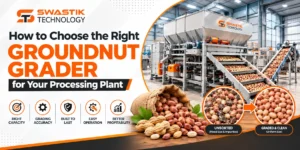
Grading equipment sorts kernels by size using mesh screens or rotating drums, which matters both for uniform roasting (so smaller kernels don’t burn while larger ones stay underdone) and for meeting export size specifications. For higher-value product lines, an optical color sorter can also remove discolored, moldy, or aflatoxin-affected kernels — an important quality-control step given peanuts’ susceptibility to fungal contamination during storage.
5. Packaging Machinery
The final stage seals your product for distribution. Depending on the product, this ranges from semi-automatic pouch and jar filling for peanut butter to vertical form-fill-seal machines for roasted and salted peanut snacks, and drum or can filling lines for bulk oil. Automated weighing and sealing reduces labor cost per unit and improves shelf presentation — an increasingly important factor for retail and export buyers.
Matching Machinery Capacity to Your Production Goals
One of the most common mistakes first-time plant owners make is buying machines with mismatched capacities — a high-throughput sheller feeding an undersized roaster, for example, creates a bottleneck that wastes the extra capacity you paid for. Before finalizing equipment, map out:
- Your target daily or hourly output in kilograms or tons
- The capacity rating of each machine in the line, expressed in the same unit
- A buffer of roughly 15–20% between consecutive stages, so minor slowdowns at one machine don’t stall the whole line
- Your growth plan — whether you want modular equipment you can add units to later, or whether you’re building for peak capacity from the start
- A capable Peanut Processing Plant Manufacturer should be able to walk you through this capacity-matching exercise and recommend a coherent equipment set rather than just selling you individual machines.
- Choosing a Peanut Processing Equipment Supplier
- The machinery decision is where most of your capital goes, so it deserves careful supplier evaluation. When comparing a Peanut Processing Machine Supplier or Peanut Processing Plant Manufacturer, look closely at:
- Build materials — food-grade stainless steel (SS304 or SS316) in all product-contact parts is non-negotiable for hygiene compliance and equipment longevity
- Customization — every peanut variety and product mix behaves differently; the supplier should be willing to adjust roller gaps, roasting profiles, and screen sizes to your specific raw material rather than offering a fixed configuration.
- Documented capacity and efficiency figures — ask for kernel breakage rates on the sheller, oil yield percentages on the press, and actual throughput figures (not just theoretical maximums) with the ability to see the machines running, ideally at a reference installation.
- Spare parts availability and after-sales support — rollers, screens, and belts wear out; a supplier without local or fast-shipping spare parts support can cost you days of downtime.
- Turnkey capability — for first-time plant owners, a manufacturer that offers complete line design, installation, commissioning, and operator training significantly reduces the risk of mismatched or poorly integrated equipment.
- Compliance and certification — machinery should meet relevant food safety and mechanical safety standards for your target market, particularly if you plan to export.
- Visiting an operational groundnuts plant running the same supplier’s equipment, and speaking directly with the operators about uptime and maintenance needs, is one of the most reliable ways to validate a machinery investment before you commit.
- Automation Level: Manual, Semi-Automatic, or Fully Automatic
- Peanut processing machines are available across a wide automation spectrum, and this choice significantly affects both your upfront investment and your ongoing labor costs:
- Manual/semi-automatic lines suit smaller operations or businesses just entering the market, with lower capital cost but higher labor dependency and more batch-to-batch variability.
- Semi-automatic lines with PLC-controlled roasting and automated weighing reduce labor needs while keeping capital investment moderate — a common choice for mid-sized plants.
- Fully automatic lines, with integrated conveying, continuous roasting, automated grading, and robotic packaging, suit high-volume operations where consistency and labor efficiency at scale justify the higher upfront cost.
- There’s no universally “right” level of automation — the correct choice depends on your production volume, local labor costs, and how quickly you expect to scale.
Maintenance and Operating Considerations
Peanut processing machinery, particularly shellers, roasters, and oil presses, experiences continuous mechanical stress and should be selected with maintenance access in mind. Look for:
- Easily replaceable wear parts (roller surfaces, screens, blades) without requiring full machine disassembly
- Accessible lubrication points and clear maintenance schedules from the manufacturer
- Dust and residue management, since peanut shell dust is combustible and needs proper collection systems for both safety and hygiene
- Operator training from your supplier, since improper roller adjustment or roasting settings are common causes of quality issues, not equipment failure
Final Thoughts
Setting up a peanut processing plant is fundamentally a machinery decision. Get the process line right — cleaning, shelling, grading, roasting, peeling, and product-specific finishing, each correctly sized and sequenced — and the rest of the business becomes far easier to run. Get the equipment mismatched or under-specified, and no amount of marketing or market demand will make up for a bottlenecked, inconsistent production line.
Working with an experienced Peanut Processing Plant Manufacturer who can supply a matched, capacity-balanced line, back it with genuine after-sales support, and walk you through the technical specifications of each machine, is the single most important decision you’ll make when building a Groundnut Processing Plant. Take the time to compare real throughput data, inspect running installations, and choose equipment built for the specific peanut varieties and end products you plan to process.